Showing posts with label corn. Show all posts

Wednesday, January 11, 2012

My Traditional Garden 2011: What I Learned....

1.  DOUBLE PLANTING THE ROWS of veggies worked great and almost doubled my harvest.  Tomatoes didn't do too well for anyone this year, but I still had plenty for all the salsa I wanted with the 28 plants I had.  And I plenty of beans too.

Corn Crop after the Wind Storm
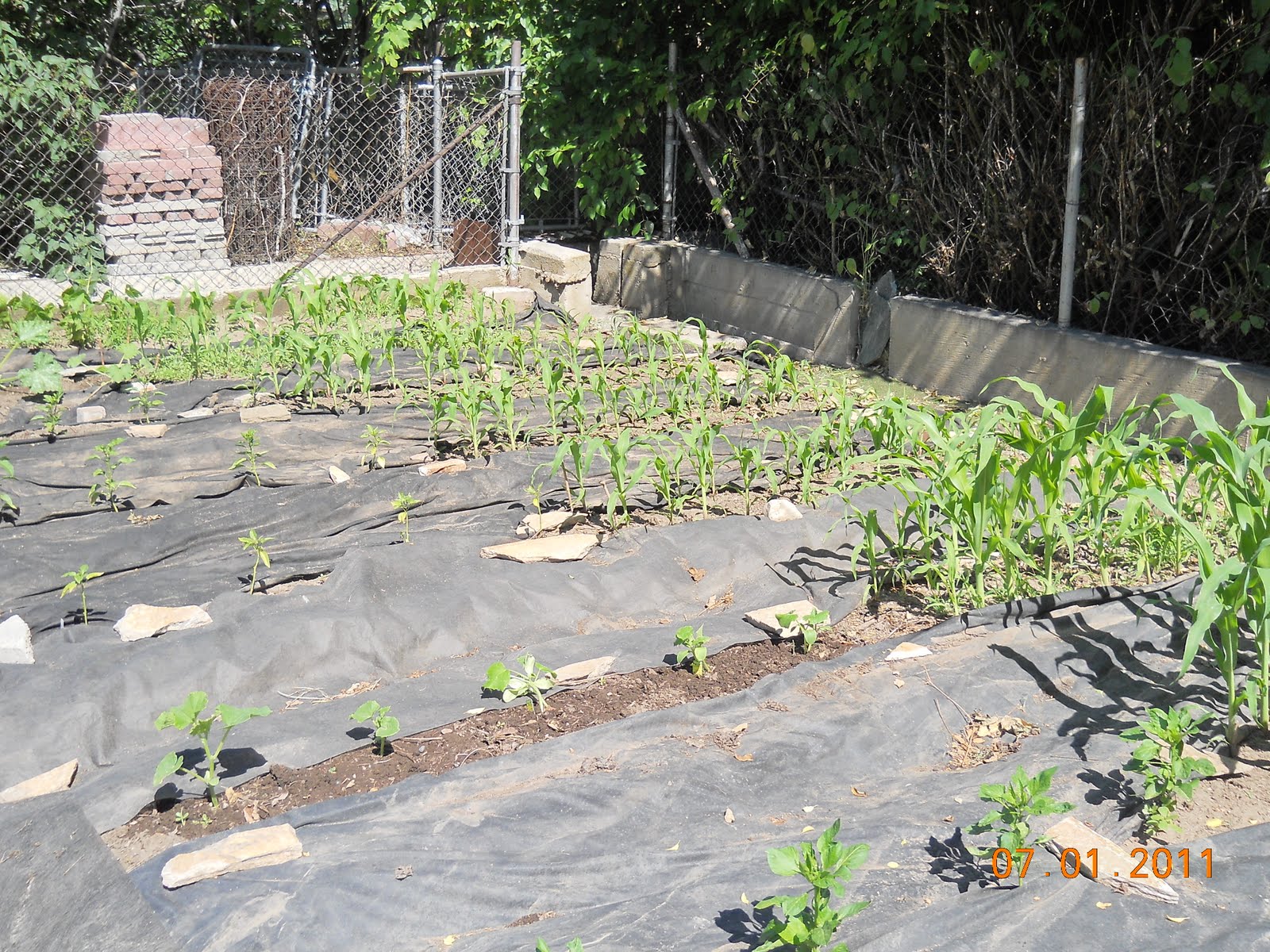
2.  After CORN comes up, pile dirt around the bottom couple of inches to create BRACE OR PROP ROOTS so stalks won't blow over in the wind.  (I lost half my crop.)  Kmetzsch's corn fell over too, but they propped it up asap and staked it and they preserved their harvest by doing so.

3. I planted two CORN varieties, Serendipity and Ambrosia, but the SERENDIPITY did best, with the longest, fullest ears at harvest.

4.  The Kentucky Wonder POLE BEANS were much better than last years, but still a bit stringy.  If I plant pole beans again, I should find a way to extend the fence up another 3 to 5 feet and try an even better variety.  I could put rebar down the fence posts and run four inch chicken wire between posts.

5.  I need to plant double or triple the GREEN PEPPERS for eating and salsa.  There is never enough.  i had enough of the other peppers, but should plant more of those too so that I will be able to share.

6.  American Fork neighbor, John Cox told us that he dumped a pile of sand and a pile of COMPOST from the GREEN WASTE PLANT into his pasture.   Over the next couple of years, he said, weeds grew like crazy out of the sand pile, but nothing grew in the Green Waste compost, which means it has no nutritional value.  It is good for TILTH or as a GROUND COVER MULCH, but that's about it.

7.  Plant three or four SUCCESSIONS OF CORN so we can enjoy the harvest well into the fall.

8.  PICKLING CUCUMBERS did next to nothing.  Aunt LuAnn supposedly planted a different variety of cucumber that was long and skinny, good for slicing and pickling.  I need to find out the variety and give it a try.

9.  July is too late for planting PUMPKINS.  Got some nice vines though.

10.  Putting LANDSCAPE FABRIC down right after planting eliminated a lot of extra weeding.  Just make sure the seeds or seedlings are not covered.

What I Learned This Year: 2010

1.  Cursed STRAWBERRIES!!  I weeded them, topped them all, and fertiziled them only for a small handful once in a while.  Every year I need to plant at least a dozen or more new plants for a continual harvest.  Plant everbears for all season long satisfaction.

2.  POLE BEANS seem to give a bigger, longer harvest.  The variety I planted was tough and stringy (Blue Lake Pole).  I will try another variety next year.  The vines grew up the fence and into the neighbors lilac bushes- twice as high as the fence.  They didn't really grow up the corn stalks, however.

3.  All SQUASH PLANTS were lousy this year.  Don't buy seeds from Lowe's anymore.  Yellow Squash and Zucchini was tough and yucky- not a big harvest either.

4.  I ordered lots of PLANTS FROM SPRINGHILL this last year.  We will see if they grow back next year and if it was worth it.  Planting 30+ plants was lots of fun.  (The ground cover plants are thriving.  Only two out of six ferns came back.)

5.  Once you lose a branch off a BALL WILLOW TREE, its not long til the whole tree splits and starts to come down.  We took it down before it fell.  (Dad and Micah)

Green Garden Goodness


6.  DIVIDING PLANTS already growing in my yard is a lot cheaper than paying for new ones.  (2 out of 3 lavendar plants survived and both daisy divisions survived.)

7.  I planted PEAS in mid-July.  The plants got nice and tall and the harvest was great but once it froze, the pods, which were still to small to pick, cracked and were inedible.  Plant them a little earlier, like July 1st.

8.  I missed not having PUMPKINS in the fall.  Be sure and plant some this year.  Or plant lots at Gram's around her trees where sprinklers are already set to water.

9.  Grandpa Molyneux said to FERTILIZE THE CORN with nitrogen fertilizer for bigger corn cobs.

10.  Uncle Marlo Bergeson says if you cut your PEACHES into quarters or more, you lose flavor into the syrup.  He recommends putting halves into bottles.  He says Peggy's tree is CANADIAN HARMONY.

11. Plant two or three different varieties of TOMATOES in case one of the varieties gets a disease.  Its a good idea to get them from different nurseries too.

2009 Garden: What I Learned This Year


Erica and Dawson, enjoying Spring sunshine

1.  My biggest, widest, deepest FURROW needs to be right next to the curb on the east side of the garden.

2.  I thinned the STRAWBERRY PLANTS out in about 1/4th of the patch, but this area did not produce as many strawberries, and did produce many weeds.  Next year I will top them with the large hedge sheers and thin them a little but not too much.

3.  CORN needs to be kept close (instead of at Peggy's) so that I can check it often and eat it super fresh.  Maybe instead some peppers can be planted at Peggy's (so I can have more space in my garden).

4.  Planting BROCCOLI was a waste of space this year.  I had so many aphids.  I guess I should have sprayed for them.


5.  FERTILIZING STRAWBERRIES and RASPBERRIES (1/3rd ammonium sulfate, 1/3rd azalia food, 1/3rd ironite) as well as watering twice a week improved production.  Next time plant everbearing strawberries.


6.  I enjoyed planting both SPINACH and SWISS CHARD.  but out of the two I prefer swiss chard.  It grows back quickly after harvesting and tastes just as good, where spinach is pulled completely out and you only get one picking.

7.  We tried letting the TOMATOES sprawl out over black landscape fabric (or black plastic at Mom's) but it really was a big mess.  Better to put them in cages.  Mom may have gotten tomatoes a couple of weeks earlier, but I don't think she really got that much more in production.   I lost a lot of tomatoes- they rot where they touch the fabric.

8.  I loved having CARROTS in the garden.  They were delicious.  I kept them in clear til winter.

9.  TILL THE GARDEN in the FALL so that I can be prepared to plant my Spring garden earlier.  I say this every year and never get around to it.


What I Learned From my Garden 2007

1.  Plant the BROCCOLI in the corner or somewhere so I can till the rest of the garden in the fall, and continue to let it grow undisturbed through November.

2.  PLANT EARLIER!!  The garden didn't do as well as I expected and I think that was for three reasons:  (1)  planting so late (June 9th- due to just moving in), and (2)  the soil hadn't been amended and seemed barren- no sign of life, and (3)  it needed more water.

3.  Garden fresh CORN is delicious!!  It malts in your mouth as the kernels are so tender.  We probably only got four or five pickings off of it, but again I wonder if that's because we planted so late.  It is a big sacrifice of space.

4.  If I plant PUMPKINS again (we had volunteers this year), plant them along the east side and let the vines grow into the playhouse area.  They take up so much space!!

5.  Use the FENCE.  Next year I want to plant possibly peas or pole beans along the west fence.  Peas need some type of support.

6.  Kill SPIDER MITES ASAP.  They spread fast!!

7.  Plant more than one CHERRY TOMATO plant.

My Raspberry Patch


8.  STRAWBERRIES need lots of sun to do well.


9.  During the hottest weeks of the summer, we may have to WATER the garden extra, or the sun will take its toll on the success of our harvest.

10.  While the RASPBERRIES are producing, water them every other day.

11.  Sprinkle SEVIN on the CORN early on and down into the plant a couple of times before the stalks get too high to control pests.

Wednesday, August 17, 2011

Critical Corn Care

After the rainstorm the other night, I walked out into the garden to quite a devestating surprise.  Half of my corn crop was down on the ground.  I consider every square inch of my garden precious.  And to put a full quarter of my garden into growing corn on the cob only to have it wasted by one little storm is frustrating, to say the least.  I even considered, if only for a minute, not planting corn next year.  But even as we were feasting on the delicious harvest of corn tonight at dinner, Mike said, "This is totally worth it."  Obviously something's got to change or get better, so that this valuable garden space is not wasted again.

So I did some research and found out there are some things I can do to improve not only the durability of the corn stalks, but also the ear size and corn taste.  I will start from the very beginning.

Before we even start planting our garden, there is much we should be doing to improve our soil, thereby improving the year's quality of harvest.  Putting compost into the garden soil each year is the best thing we can do to improve soil condition, making it the ultimate place for growing delicious vegetables.  In the spring before we plant, use a fertilizer that is high in nitrogen (16-16-8) and work it into the soil as we till the garden.  This step is necessary to growing large, full ears of corn, and is also good for the rest of the garden.  Also, as we rotate our crops, reducing threats of diseases and pest problems, plant corn in areas where previously was grown beans or peas, which actually put nitrogen back into the soil as they grow, thereby benefiting the corn planted in the same spot the next year.

Corn grows quite tall and therefore should be planted on the north side of our garden so as not to shade the rest of the things we have planted.  I have even heard that rows should be planted going from the east to the west so as to maximize the sunlight, but I have not tried out that theory. 

Corn can be planted as soon as the threat of frost is gone, which for this area is around Mother's Day, or the middle of May.  We must plant at least three rows of the same variety together so that they have good pollination.  After the plants come up, they should be thinned to about eight inches apart, taking out the smaller or weaker plants. 

This year I have planted my corn more compactly, following after the pattern of the Square Foot Gardening method, that says that we have learned to space things so far apart in rows because of the traditions that farmers have passed down to us.  However, most home gardeners do not have a horse or a tractor or any other farm equipment that needs to get in between these rows.  So we place rows closer together, or, as I have done this year, we double plant our rows, thus maximizing our gardening space.

This is the new thing I have learned:  When planting, prepare the row like normal, spacing it 30 to 36 inches apart.  Then make a four inch deep planting furrow.  Plant the seeds 3 or 4 inches apart and cover them with about one inch of soil.  Because the planting furrow was four inches deep, you still have a small furrow down your row.  When the plants have come up, thin them to until they are about eight inches apart.  When plants are about 6 inches tall you then pull in dirt from the surrounding furrow to fill in around the corn stalks.  The plant will then put out extra roots in the mounded area called 'prop roots' or 'brace roots'.  These will strengthen the stalk of corn so that it will not blow over in the wind. 

Another important step when planting corn has to do with pest control.  Now I do not like to put any kind of poison in my garden if I can help it.  But I also do not like bugs in my corn.  When the corn plants are around eight inches tall, sprinkle Sevin dust down into the tops of the plant.  This eliminates pest problems before the ears of corn ever start growing.  Also spraying the corn silk with Bt helps control the earwigs and other bugs that get down inside the ears of corn. 

I tell people NOT to plant corn in their home garden, because once you do, you can never eat corn from the store or even the stand again.  You will never be satisfied with the lesser quality.  The reason is this:  The sooner you get the corn from the garden into the pot of boiling water the better it tastes.  The kernels are so sweet and tender, they literally pop with juicy flavor as you bite into them.  The longer the corn has been picked, the sweet sugars found in the corn turn into starch, and the kernels get tougher too.  I've heard someone say if you have your water boiling as you are picking your corn, but you happen to stumble on your way into the kitchen, turn around and pick it fresh again.  The fresher the better.  It is mouth-watering and sumptious.  And IT IS totally worth it.